103 Million Voters, One Question: Where Is the Register?
,,, Before Nigerians Vote, Let Them See the Register!
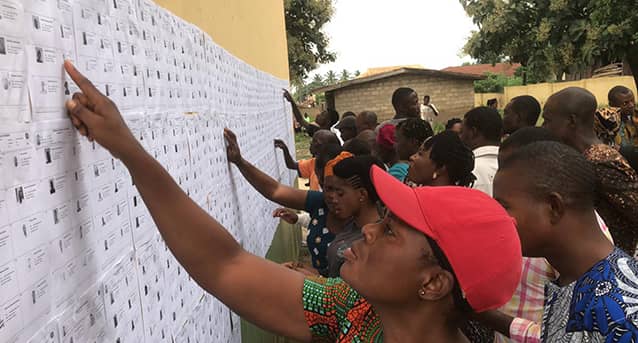
By Kenneth Eze, an Election Observer and Lead Director, Speak Out Africa Initiative
Abuja, Nigeria — Nigeria's 2027 general election is already testing the country's commitment to electoral transparency. At the centre of the latest concern is not a complicated technological innovation or an obscure electoral procedure. It is a basic democratic document: the Register of Voters.
Section 19(1) of the Electoral Act 2026 is unambiguous. Not later than 90 days before a general election, INEC shall designate seven days during which the voters' register for each Local Government, Area Council or Ward must be displayed for public scrutiny at every Registration Area and published on INEC's official website or another website established by the Commission. Section 19(2) further provides an opportunity for citizens to challenge omissions, inclusions and errors.
INEC itself announced that the register would be displayed from 9 to 15 October 2026, although PVC collection was the front-line message. The Commission says the National Register now contains approximately 103 million voters, following three phases of Continuous Voter Registration. Yet a serious transparency question lingers.
INEC's online Preliminary Register portal has continued to display a message stating that there are currently no preliminary registers to display.
The controversy is not confined to the internet. ARISE News reported that its independent verification in parts of Lagos, particularly Alimosho and Shomolu, found circumstances in which access to the register was reportedly available only upon request and voters were allowed to check their individual names between 9 a.m. and 3 p.m. ARISE argued that this was not equivalent to the open public display contemplated by Section 19. INEC Lagos rejected the report, insisting that the register was displayed across all 245 Registration Areas in the state. ARISE has since stood by its investigation.
Also, many Nigerians say they cannot independently confirm the Commission's claim that the voters' register was physically displayed as required. This raises questions about public confidence in an electoral umpire asking Nigerians to trust the 2027 electoral process. It also raises the question of why such a vital component of the electoral process as the display of the voters' register would be combined with PVC collection, which ordinarily should be an open exercise allowing people to collect their cards at any time during the designated collection period.
This disagreement should not be dismissed as a media quarrel. It raises a fundamental question: can citizens independently verify that the electoral register has actually been made available to them as the law requires?
The purpose of displaying the register is obvious. A voter should be able to discover before Election Day that their name is missing, wrongly spelt, incorrectly entered or otherwise inaccurately recorded. Citizens should also have the opportunity to identify ineligible entries and raise objections. And what about those whose details may have been relocated and who need to confirm their information before Election Day?
These safeguards become even more important when dealing with a register of more than 100 million voters.
INEC Chairman Professor Joash Amupitan has promised that the 2027 election will be a “global benchmark for transparency, integrity, and peace.” Those are welcome assurances. But electoral credibility is not created by assurances alone. It is created when institutions demonstrably obey the law and make the process independently verifiable.
Nigeria has been here before. The European Union Election Observation Mission found that the 2023 elections exposed systemic weaknesses and that shortcomings in electoral administration and transparency damaged public trust in INEC. The lesson should be clear: perception matters because transparency matters.
It would therefore be dangerous to allow uncertainty surrounding the register to linger. INEC should publish the register online, provide a transparent account of physical display across the country and, where citizens were denied meaningful access, provide a genuine remedial opportunity to inspect and challenge the register. This is not about attacking INEC. It is about protecting INEC's credibility.
The Commission does not need Nigerians merely to believe that the register was displayed. It needs Nigerians to be able to see it, scrutinise it, challenge it and verify it.
With the 2027 election approaching, that should not be controversial.
It is the law.
It is transparency.
And it is the minimum that Nigerian voters deserve.
“We are not asking INEC for a favour. We are asking the Commission to obey the law and make its compliance independently verifiable.”
You can reach the writer via engrchukeze2014@gmail.com.